

8 April 2011- The modern society is heavily dependent upon rubber- both natural rubber and synthetic rubber! Rubber products are used everywhere- at work, at home, at play, and even while we move using any mode of transportation- automobiles, trains or aircrafts. Industries too use rubber to make various products ranging from rubber hoses, belts, gaskets to tires and rubber molding among many other rubber products. The common factor between all these goods is the rubber but there are differences too and the basic difference is the type of rubber used- natural and synthetic rubber! In this article we will try to know why do we use natural and synthetic rubber along with various applications of natural and synthetic rubber. We will also come to know about the advantages of both- natural as well as synthetic rubber.
Natural and Synthetic Rubber- Definition
Before moving on to know the uses and advantages of natural and synthetic rubber, it seems apt to know the basic definition of natural rubber as well as synthetic rubber.
Natural Rubber is a polymer found in the sap of the rubber tree. This sap is collected, and when exposed to air and mild heat, it gives natural rubber. However, as natural rubber is very hard, it becomes valuable only after vulcanizing - heating in the presence of sulfur. The process of vulcanization makes natural rubber a more coherent substance, somewhat soft and having elasticity.
Synthetic Rubber is any type of artificial elastomer, invariably a polymer. It is produced in factories with the use of different catalysts. The feedstocks for synthetic rubber industry are products of the petrochemical industry.
Rubber- natural or synthetic- is usually vulcanized, most often with sulfur. For some specialty uses, other agents are also used sometimes.
Why do We Use Natural and Synthetic Rubber?
Due to its many characteristics like elasticity, resilience, and toughness, rubber is used for making many products for such sectors as transportation, industrial products, consumer products, hygienic and medical sectors. Whether natural or synthetic- rubber has certain common characteristic features because of which we use natural and synthetic rubber.
- Rubber is elastic as well as water-resistant.
- It is resistant to alkalies and weak acids.
- Rubber has such characters as elasticity, toughness, impermeability, adhesiveness, and electrical resistance. All these properties of rubber make it useful as an adhesive, coating composition, a molding compound, and an electrical insulator.
- It traps air and thus it floats.
- It is a bad conductor of electricity and thus doesn't conduct electricity.
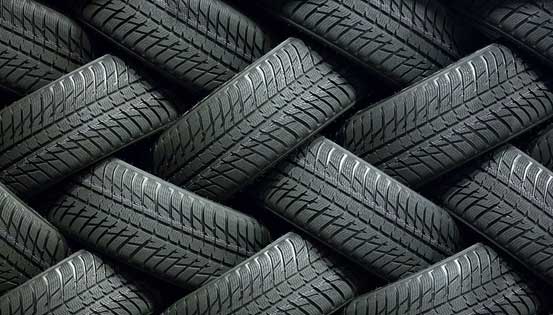
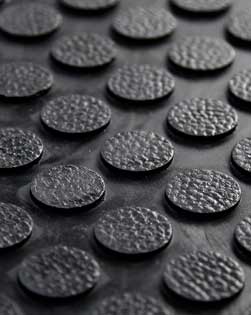
Natural or synthetic rubber- both of them in their native form are useless. After addition of chemicals , these rubbers take on properties that cannot be competed by any other known material in the world. Depending on the chemicals used, products made of rubber can be soft, resilient, and/or hard in varying degrees.
When talking about individual advantages of all types of synthetic rubber, it has better aging and weathering properties, it is more resistant to oil, solvents, oxygen, ozone, and certain chemicals. Synthetic rubber also has better resilience over a wider temperature range.
Individual advantages of natural rubber include less building up of heat from flexing and greater resistance to tearing when hot. It is this superior tear strength and excellent resistance to heat that makes natural rubber better suited for high-performance tyres for heavy vehicles like trucks and buses, as well as more sophisticated ones like racing cars and aircrafts.
Natural and Synthetic Rubber Applications
Rubber ProductsThe majority of rubber- natural as well as synthetic rubber- is used for automobile tires. However, for this and for similar other applications of rubber, a filler or reinforcing agent must be added (carbon black is by far the most common filler for the purpose). The unprocessed rubber, especially natural rubber, is used in such products as adhesives, contraceptives, and latex balloons. Vulcanized rubber which is harder, less elastic, and more durable is extensively used for various purposes such as for making vehicle tyres and hose pipes and even artificial hearts to waterproof gaskets. The following areas use natural and synthetic rubber for making various products.
- Transportation sector uses most of the natural and synthetic rubber. It is the largest end user of rubber most of which goes into making tires and tire products.
- Rubber is also used for making industrial products like transmission and elevator belts, hoses, tubes, industrial lining, bearings etc.
- Synthetic and natural rubbers are also used for making consumer goods such as footwear, sports goods like balls, erasers etc.
- Health sector too uses rubber for making such products as condoms, catheters, surgical gloves etc.
- Rubber is also used for making many seismic materials such as seismic rubber bearings used in building construction.
- Rubber is used for making latex goods too like threads, adhesives, molded foams, gloves etc.
Related Articles
- Anti Vibration Mountings
- Automobile Rubber Products
- Calendered Rubber Products
- Extruded Rubber Products
- Medical Rubber Products
- Metal Bonded Components
- Rubber Adhesives & Sealants
- Rubber Ball
- Rubber Bands
- Rubber Beading
- Rubber Bearing
- Rubber Belt
- Rubber Buckets
- Rubber Bullets
- Rubber Cable
- Rubber Coating
- Rubber Duct
- Rubber Expansion Joints
- Rubber Flooring/Matting
- Rubber Footwear
- Rubber Gloves
- Rubber Injection Parts
- Rubber Lining
- Rubber Magnets
- Rubber Molded Products
- Rubber Pads
- Rubber Rollers
- Rubber Stopper
- Rubber Suit
- Rubber Track
- Rubber Valve
- Rubber Balloon
- Rubber Stamps
- Rubber Fenders
- Acrylic Rubber (ACM)
- Butadiene Rubber (BR)
- Butyl Rubber (IIR)
- Chlorosulfonated Polyethylene(CSM)/ Hypalon
- Ethylene Propylene Diene Monomer
- Fluoroelastomers (FKM)/Viton
- Isoprene Rubber (IR)
- Nitrile Rubber (NBR)
- Perfluoroelastomer (FFKM)
- Polychloroprene (CR)/Neoprene
- Polysulfide Rubber (PSR)
- Silicone Rubber (SiR)
- Styrene Butadiene Rubber
How to Make a Custom Rubber Stamp?
Whenever designing a custom stamp for your company, never compromise on its quality because in the end it is the most...
Read MoreLatex and Silicone Rubber Tubing - A Comparison!
Many industries use rubber tubing for various purposes. In fact, various types of rubber tubing are used for different applications...
Read MoreSilicone vs Acrylic Adhesive- A Comparison
Silicon and acrylic adhesives are those rubber adhesives that are widely used in Polyimide tapes. In fact, the polyimide...
Read More