

Types of Synthetic Rubber
Synthetic rubber is a man-made rubber which is produced in manufacturing plants by synthesizing it from petroleum and other minerals. Synthetic rubber is basically a polymer or an artificial polymer. It has the property of undergoing elastic stretchability or deformation under stress but can also return to its previous size without permanent deformation. This page is about different synthetic rubber types. However, before understanding the types of synthetic rubber, it is desirable to learn about the kinds of rubber available in today's world.
Rubber Types- The Types of Rubber
Rubber is a broad term used to refer to many types of different polymers, simply called the types of rubber that are all elastomers. Being elastomers mean they can be stretched out and will return to their original shape let gone. Natural rubber is the original and the first kind of rubber to be used by man- it is still used in different forms. Other than natural rubber, all the other types of rubber are synthetic or manmade. Some of the examples of such rubber types include Polychloroprene (generally sold by the trade name Neoprene); Polybutadiene; Poly(styrene-butadiene-styrene) rubber or SBS rubber; Polyisobutylene; Silicone among others. All these kinds of rubber made of synthetic polymers have been discussed in detail later in this page. However, before knowing about all these synthetic rubber varieties, get to know what is synthetic rubber and what are its chemical types.
What is Synthetic Rubber?
Rubber in its native form is basically useless. It is only when certain chemicals are added, the rubber thus produced is used to make varied rubber products. Synthetic rubber is used as a substitute for natural rubber in many cases. Depending on the chemicals added and the properties associated with it, the synthetic rubber can be as hard as a bowling ball or as resilient as a rubber band or as soft as a sponge. When improved material properties are required, synthetic rubber is considered. Approximately 70% of all rubber used today are one from many synthetic rubber varieties.
What are the Chemical Types in Synthetic Rubber?
Synthetic rubber is artificially made from petrochemical feedstocks. Crude oil is the principal raw material for different types of rubber in synthetic category. As opposed to natural rubber where there is only one chemical type, there are approximately 20 different chemical types of synthetic rubber, and within all of the types of rubber, there are different grades. The different types of rubber, especially the synthetic rubber types have their own individual properties and advantages. The industry chooses the rubber types which most clearly meet the demands of an intended use.
Types of Synthetic Rubber
As is clear from the above discussion, there are about twenty different types of chemicals used for making different synthetic rubber varities. It is obvious that there are different synthetic rubber kinds. Some of the popular synthetic rubber types include the following.
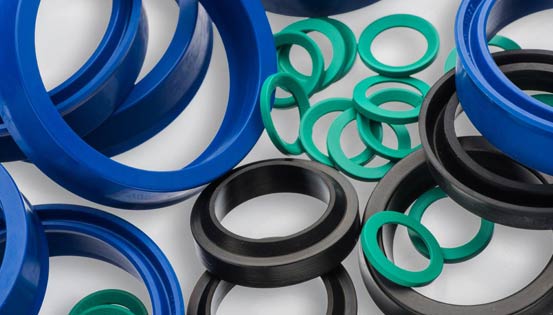
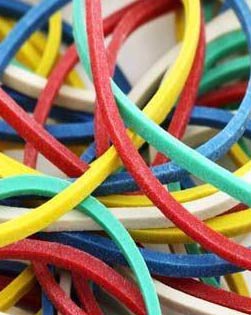
- Acrylic Rubber (ACM)
- Butadiene Rubber (BR)
- Butyl Rubber (IIR)
- Chlorosulfonated Polyethylene (CSM)/ Hypalon
- Ethylene Propylene Diene Monomer (EPDM)
- Fluoroelastomers (FKM)/ Viton
- Isoprene Rubber (IR)
- Nitrile Rubber (NBR)
- Perfluoroelastomer (FFKM)
- Polychloroprene (CR)/ Neoprene
- Polysulfide Rubber (PSR)
- Silicone Rubber (SiR)
- Styrene Butadiene Rubber (SBR)
What Led to the Development of Synthetic Rubber?
During the World War II, the United States was cut off from almost all of its sources of natural rubber in the Pacific. In order to meet the country's needs for this important material, the government built synthetic rubber plants and the manufacturing industries operated them. Synthetic rubber production increased from 8,000 tons in 1941 to 820,000 tons in 1945. After the World War II, the government sold these synthetic rubber plants to the industries. After that there is no looking back. There are different types of synthetic rubber having different properties and manufacturers and suppliers are producing different range of rubber products which are used for commercial and industrial purpose. According to a research report, the global demand for industrial rubber products is estimated to rise to 4.3% annually through 2013 to $97.8 billion. For more information, check out Rubber Industry Global Overview
How is Synthetic Rubber Produced?
Petrochemical feedstocks are the main raw material for producing synthetic rubber types. Crude oil is the principal raw material. Two types of gases too contribute in the producton of general types of rubbers in the category of synthetic rubber. These are butadien used for making Butadiene Rubber and styrene used for making Styrene Butadiene Rubber. Butadiene is a by-product of petroleum refining and styrene is captured either in the coking process or as a petroleum refining by-product. When these two gases are mixed in the presence of soapsuds in a reactor, they result into liquid latex. This is a milky liquid in which the dry rubber is coagulated into crumbs, washed, dried, and baled ready for shipment. For more details about synthetic rubber production, check out Synthetic Rubber
RELATED ARTICLES
- Anti Vibration Mountings
- Automobile Rubber Products
- Calendered Rubber Products
- Extruded Rubber Products
- Medical Rubber Products
- Metal Bonded Components
- Rubber Adhesives & Sealants
- Rubber Ball
- Rubber Bands
- Rubber Beading
- Rubber Bearing
- Rubber Belt
- Rubber Buckets
- Rubber Bullets
- Rubber Cable
- Rubber Coating
- Rubber Duct
- Rubber Expansion Joints
- Rubber Flooring/Matting
- Rubber Footwear
- Rubber Gloves
- Rubber Injection Parts
- Rubber Lining
- Rubber Magnets
- Rubber Molded Products
- Rubber Pads
- Rubber Rollers
- Rubber Stopper
- Rubber Suit
- Rubber Track
- Rubber Valve
- Rubber Balloon
- Rubber Stamps
- Rubber Fenders
- Acrylic Rubber (ACM)
- Butadiene Rubber (BR)
- Butyl Rubber (IIR)
- Chlorosulfonated Polyethylene(CSM)/ Hypalon
- Ethylene Propylene Diene Monomer
- Fluoroelastomers (FKM)/Viton
- Isoprene Rubber (IR)
- Nitrile Rubber (NBR)
- Perfluoroelastomer (FFKM)
- Polychloroprene (CR)/Neoprene
- Polysulfide Rubber (PSR)
- Silicone Rubber (SiR)
- Styrene Butadiene Rubber
How to Make a Custom Rubber Stamp?
Whenever designing a custom stamp for your company, never compromise on its quality because in the end it is the most...
Read MoreLatex and Silicone Rubber Tubing - A Comparison!
Many industries use rubber tubing for various purposes. In fact, various types of rubber tubing are used for different applications...
Read MoreSilicone vs Acrylic Adhesive- A Comparison
Silicon and acrylic adhesives are those rubber adhesives that are widely used in Polyimide tapes. In fact, the polyimide...
Read More